The DD&SA Blueprint
This Blueprint sets out the full structural design of DD&SA — Direct Democracy & Sortition Assemblies — as a resident‑led democratic framework for the United Kingdom. It describes how the system works, how it is governed, how it scales, and how it maintains structural honesty and transparency.
DD&SA is not a party, a campaign, or an ideology. It is an operating system: a way of making decisions that places residents at the centre, replaces party loyalty with sortition, and replaces opaque negotiation with transparent, evidence‑based deliberation and direct voting.
Blueprint Visuals
These diagrams illustrate the DD&SA civic architecture from first contact to final accountability.
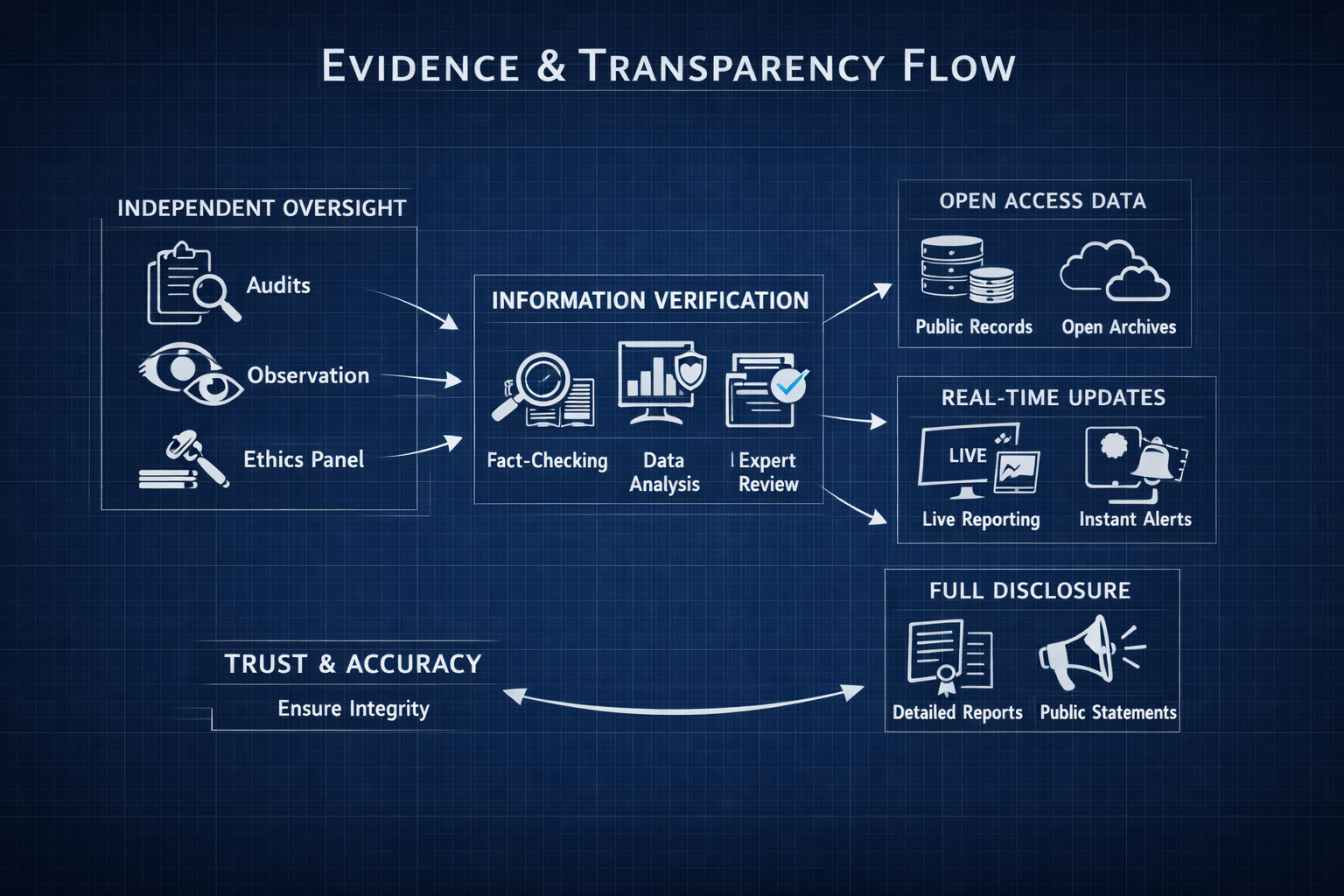
1. Constitutional Logic of DD&SA
The constitutional logic of DD&SA is simple: residents hold final authority over public decisions, and assemblies exist to provide informed options, not to replace the public. Power flows downward from residents, not upward to parties or permanent institutions.
Core constitutional pillars
- Resident authority: all binding decisions require resident approval through direct voting.
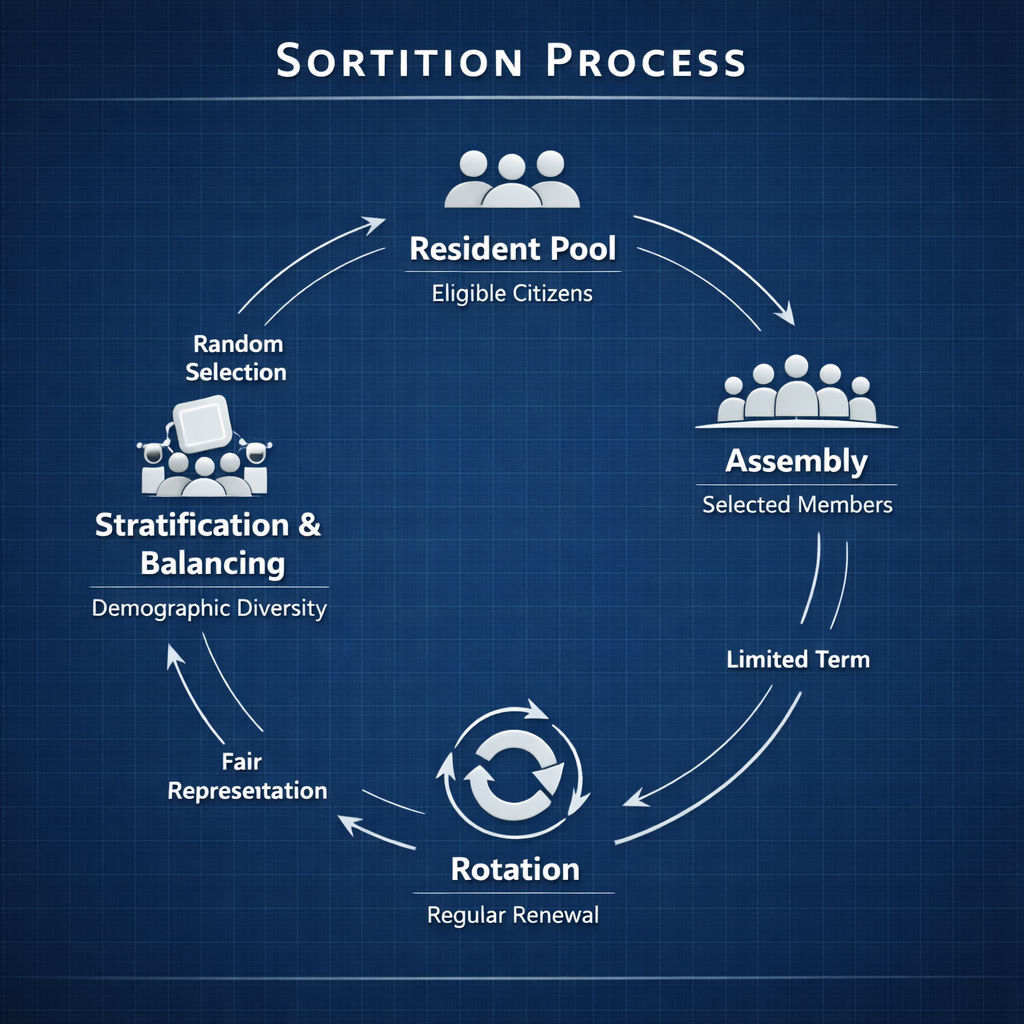
- Sortition assemblies: deliberative bodies are selected by random lottery with demographic balancing.
- Evidence‑based process: decisions must be grounded in published evidence and transparent reasoning.
- Transparency: all stages of the process are documented and publicly accessible.
- Non‑partisan structure: no parties, whipping, or career incentives inside assemblies.
2. The DD&SA Decision Cycle
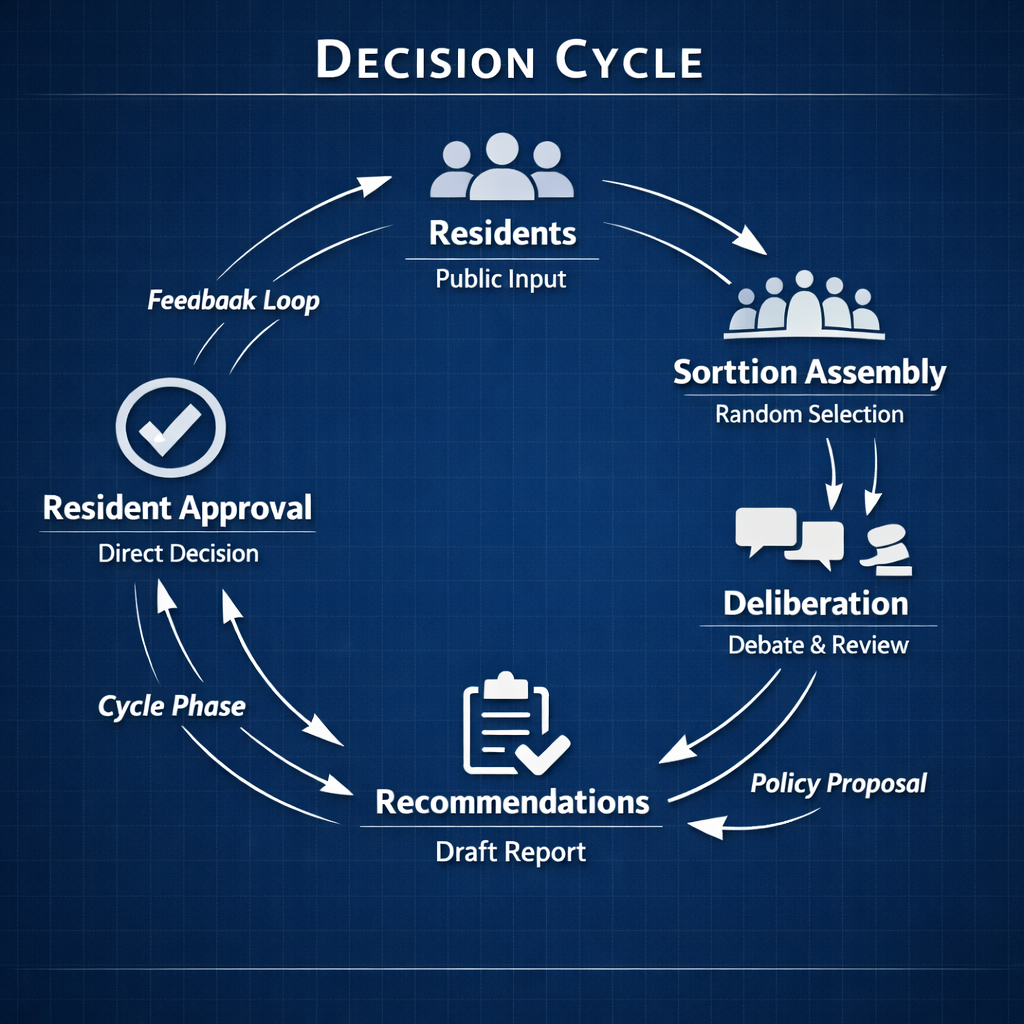
Every DD&SA decision follows a repeatable cycle. This cycle is the backbone of the system and applies at local, regional, and national levels.
Stage 1 – Issue Initiation
Residents propose issues through online platforms, local forums, or physical submissions. Proposals are grouped, clarified, and made publicly visible. Where multiple proposals overlap, they are merged into a single, coherent issue description.
- Any resident can propose an issue.
- Issues are scoped clearly: what is in, what is out.
- Residents can support, refine, or challenge proposals.
Stage 2 – Agenda Selection
When multiple issues compete for attention, residents vote to prioritise them. The most urgent or widely supported issues are scheduled for assemblies. This prevents agenda‑setting by parties or narrow interest groups.
Stage 3 – Sortition Assembly Formation
A resident assembly is formed using sortition. Invitations are sent randomly to residents within the relevant geographic or thematic scope. Those who accept enter a volunteer pool. A selection algorithm then chooses a balanced group that statistically mirrors the population.
- Random seed and method are published.
- Demographic balancing criteria are transparent.
- Selection is independently auditable.
Stage 4 – Deliberation and Option Design
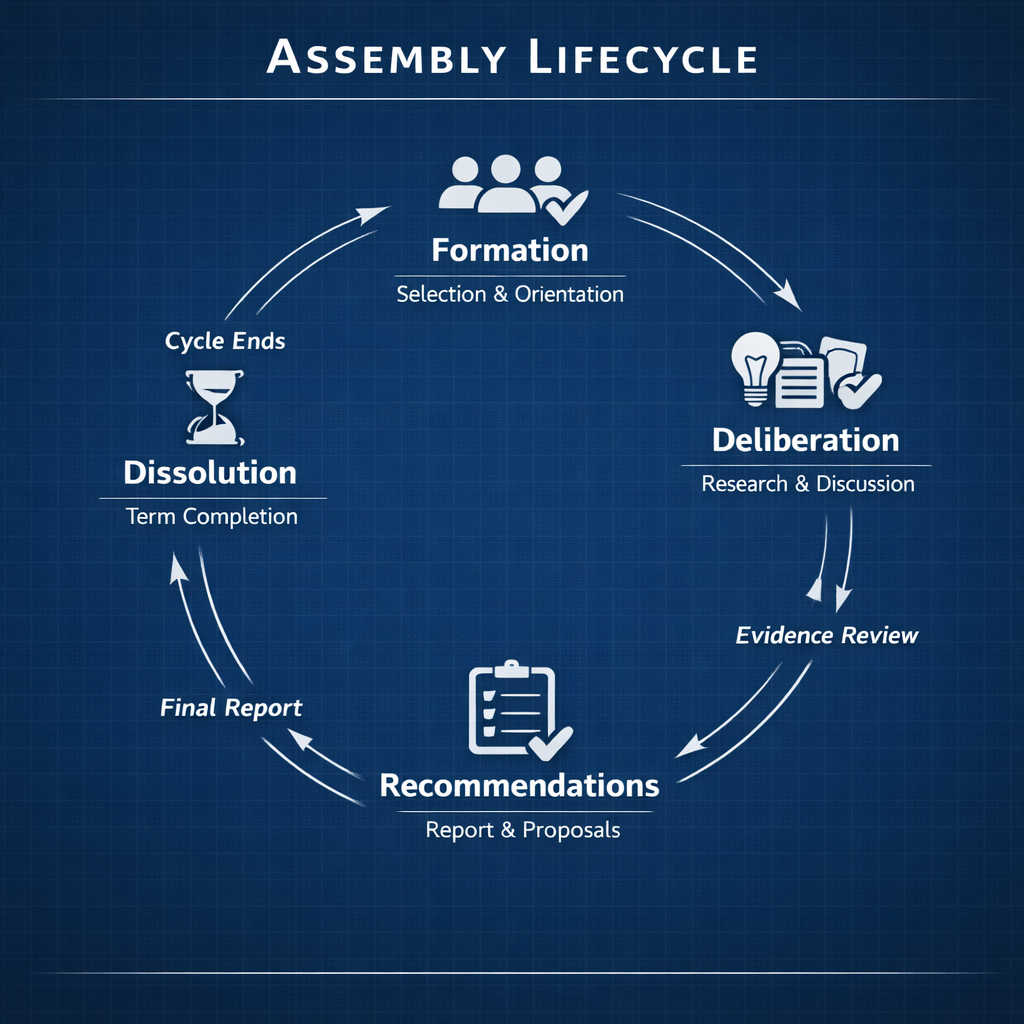
The assembly meets over multiple sessions. Members receive evidence packs, hear from experts and stakeholders, and deliberate in structured formats. Their task is to design clear, understandable options for the public to vote on — not to decide the outcome themselves.
Stage 5 – Public Vote
The assembly’s options are turned into precise, plain‑language questions. Residents vote directly using secure, accessible methods (online, postal, and in‑person where possible). Results are published with turnout, regional breakdowns, and any relevant notes.
Stage 6 – Implementation and Review
Once a decision is approved, implementation bodies — local authorities, agencies, or dedicated DD&SA structures — are responsible for carrying it out. Progress is monitored and reported back to residents. Where necessary, new assemblies can be triggered to review or adjust decisions.
3. Governance and Safeguards
DD&SA requires governance structures that are neutral, transparent, and limited in scope. Their role is to keep the process honest, not to steer outcomes.
3.1 Process Stewardship
A small, non‑partisan stewardship body oversees the integrity of the process: sortition, evidence standards, transparency, and accessibility. It does not set agendas or influence decisions.
- Publishes selection methods and random seeds.
- Maintains evidence standards and disclosure rules.
- Ensures accessibility and inclusion.
- Audits transparency and publication of materials.
3.2 Rights and Legal Compatibility
DD&SA operates within existing legal frameworks and rights protections. Decisions cannot violate fundamental rights or statutory obligations. Where conflicts arise, assemblies can be convened specifically to explore lawful alternatives.
3.3 Conflict of Interest Rules
Assembly members, experts, and facilitators must declare relevant interests. These declarations are published alongside evidence packs and reports. Where conflicts are significant, alternative contributors are sought.
4. Digital and Physical Infrastructure
DD&SA is designed to operate across both digital and physical spaces. The infrastructure must be secure, simple, and transparent.
4.1 Digital Platform
A dedicated platform hosts issue proposals, evidence packs, assembly reports, and voting interfaces. It is built to be auditable, with clear logs of changes and decisions.
- Public access to all non‑sensitive materials.
- Version history for documents and proposals.
- Clear separation between information and opinion.
4.2 Physical Spaces
Assemblies require physical or virtual rooms where residents can deliberate without pressure. Venues must be neutral, accessible, and free from partisan branding.
5. Scaling the Model
DD&SA is designed to scale through replication, not centralisation. Local pilots demonstrate the model, refine processes, and build trust. Over time, assemblies at different levels form a networked democratic system.
No central authority rolls the model out. Each new assembly is founded on the published record of those before it — the same processes, the same transparency standards, the same safeguards — adapted to local conditions. Scaling by replication means a failure anywhere is a lesson everywhere, and a success anywhere is a template everywhere.
6. Transparency Standards
Transparency in DD&SA is not a courtesy extended to residents. It is an operating requirement of the system. Every assembly publishes, by default: the question it was convened to answer, the evidence packs it received, the experts it heard and what they were asked, summaries of its deliberations, its reasoning, and its final recommendation.
Publication is timely, permanent, and free to access. Nothing material to a decision may remain unpublished, and any redaction must itself be recorded and justified. The standard is simple: residents must be able to see what the assembly saw. A decision that cannot be inspected cannot be trusted — and under DD&SA, every decision can be inspected.
7. Existing Institutions
DD&SA does not begin by abolishing what exists. The civil service, the courts, local government officers, and professional bodies all carry expertise the model depends on. What changes is who they answer to. Officials implement decisions made through assemblies and public votes, rather than serving a party-political executive.
During transition, assemblies operate alongside existing structures — first advising, then deciding within delegated areas, then assuming full authority as public confidence and demonstrated competence grow. Institutions are repurposed, not destroyed. The expertise remains; the incentives above it change.
8. Implementation Pathway
The pathway runs from demonstration to adoption. Local pilots — such as the Surrey Heath and National Online assemblies — prove the mechanics on real questions with published results. Successful pilots replicate across councils and regions, building a visible track record that no argument can substitute for.
As the record grows, assemblies take on formally delegated decisions, then statutory roles, with national adoption following public demand rather than preceding it. The model spreads because residents who have seen it work ask for it — a pathway measured in years of demonstrated competence, not in manifestos.
9. Role of Residents
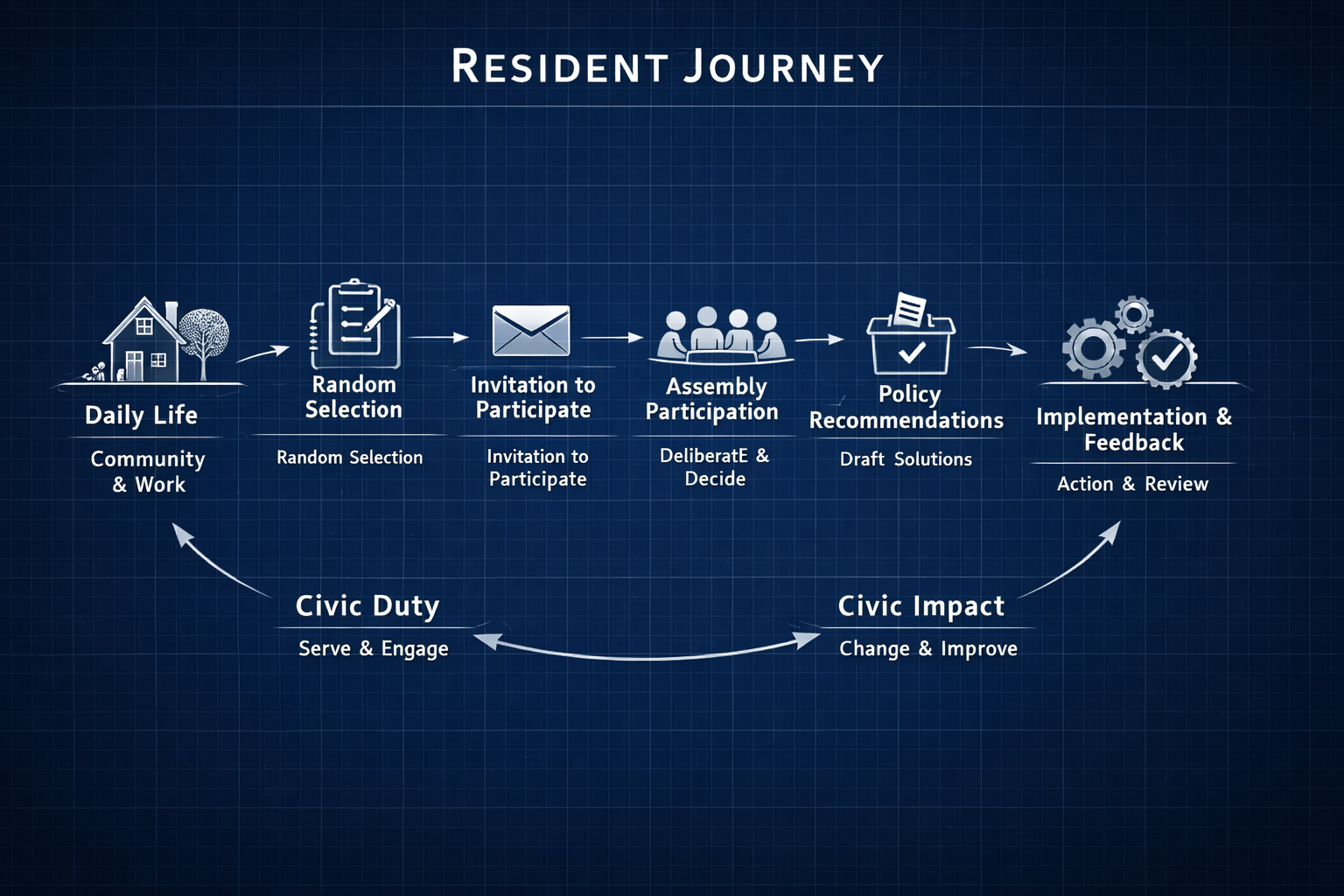
Residents occupy three roles in the model. As potential assembly members, any resident may be selected to deliberate — with the time, evidence, facilitation, and support needed to do the work well, and with service always voluntary. As voters, all residents hold the final say on every significant recommendation. As auditors, all residents can inspect the published record of any decision at any time.
No role requires expertise, wealth, connections, or political ambition. The system is built for people as they are — busy, capable, and directly affected by the decisions made in their name.
10. Summary
The Blueprint describes a governing system in which randomly selected residents deliberate on evidence, the public decides by direct vote, and every step of the process is published. Its constitutional logic places authority with residents; its decision cycle attaches feedback to every decision; its safeguards distribute power so that no single point of failure exists; its infrastructure makes participation practical; and its implementation pathway grows the model through demonstration rather than decree.
None of this requires exceptional people. It requires a structure that lets ordinary people govern well — and that is precisely what DD&SA is engineered to be.