Sortition Process
The Sortition Process diagram shows how residents move from the general pool into assemblies through random selection, stratification and balancing, limited terms, and regular rotation. It visualises sortition as a continuous, renewing cycle rather than a one‑off event.
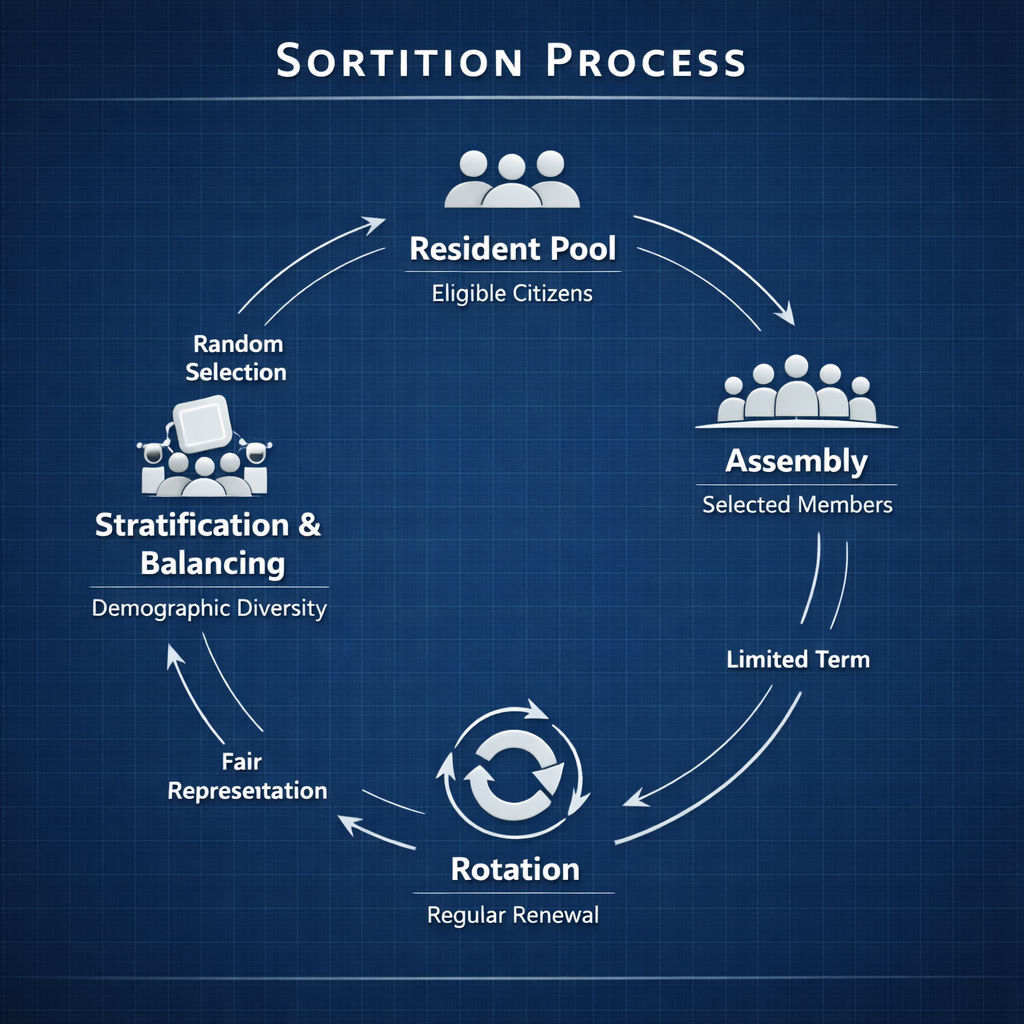
The cycle maintains demographic diversity, prevents the formation of a permanent political class, and ensures that assemblies remain representative over time. Rotation and limited terms are structural safeguards, not cosmetic features.
How selection works
- The pool. Every resident on the civic register is in the pool by default. There is no application, no nomination, and no candidacy.
- Random draw. Names are drawn by verifiable civic lottery. The draw method is published and independently auditable.
- Stratification. The draw is balanced against age, geography, and other published characteristics so the assembly mirrors the population it decides for. See Stratification for the method in full.
- Limited term. Members serve a fixed, short term. There is no re-selection to the same assembly, so no one can build a career from the seat.
- Rotation. Members return to the pool at the end of the term and a fresh assembly is drawn, keeping the body continuously renewed.
The design intent is structural rather than moral: it does not ask officeholders to resist incentives, it removes the incentives. Because no seat is permanent and no seat is sought, the returns to lobbying an individual member collapse. The complete treatment is in The Sortition Architecture, with the philosophical case in Sortition.
Related: the Decision Cycle · Sortition assemblies explained · Assemblies